Stopping Power That Responds When You Need It
Brake Repair & Service in Belgrade for squealing, grinding, vibration, and reduced stopping performance
Brake pads worn down to the metal backing plate create grinding noise and score deep grooves into rotors, turning a simple pad replacement into a more expensive rotor resurfacing or replacement job. Ray's Automotive & Diesel Repair inspects pad thickness, rotor surface condition, caliper operation, and brake fluid contamination to determine whether you need a straightforward pad swap or a more comprehensive repair addressing warped rotors or seized caliper slides. You avoid the scenario where deferred service transforms a routine maintenance task into a safety hazard with compromised stopping distance.
Brake service addresses pads, rotors, calipers, brake lines, and hydraulic fluid throughout the system, with attention to warning signs like soft pedal feel, pulling to one side during braking, or vibration that indicates warped rotor surfaces. The shop uses high-quality friction materials matched to your driving habits and vehicle weight, ensuring consistent performance during both light stops in town and hard braking on highway descents common to Montana terrain.
Request a brake inspection to measure remaining pad life and rotor condition before noise or reduced performance becomes a safety concern.
How Brake Repairs Restore Safe Stopping
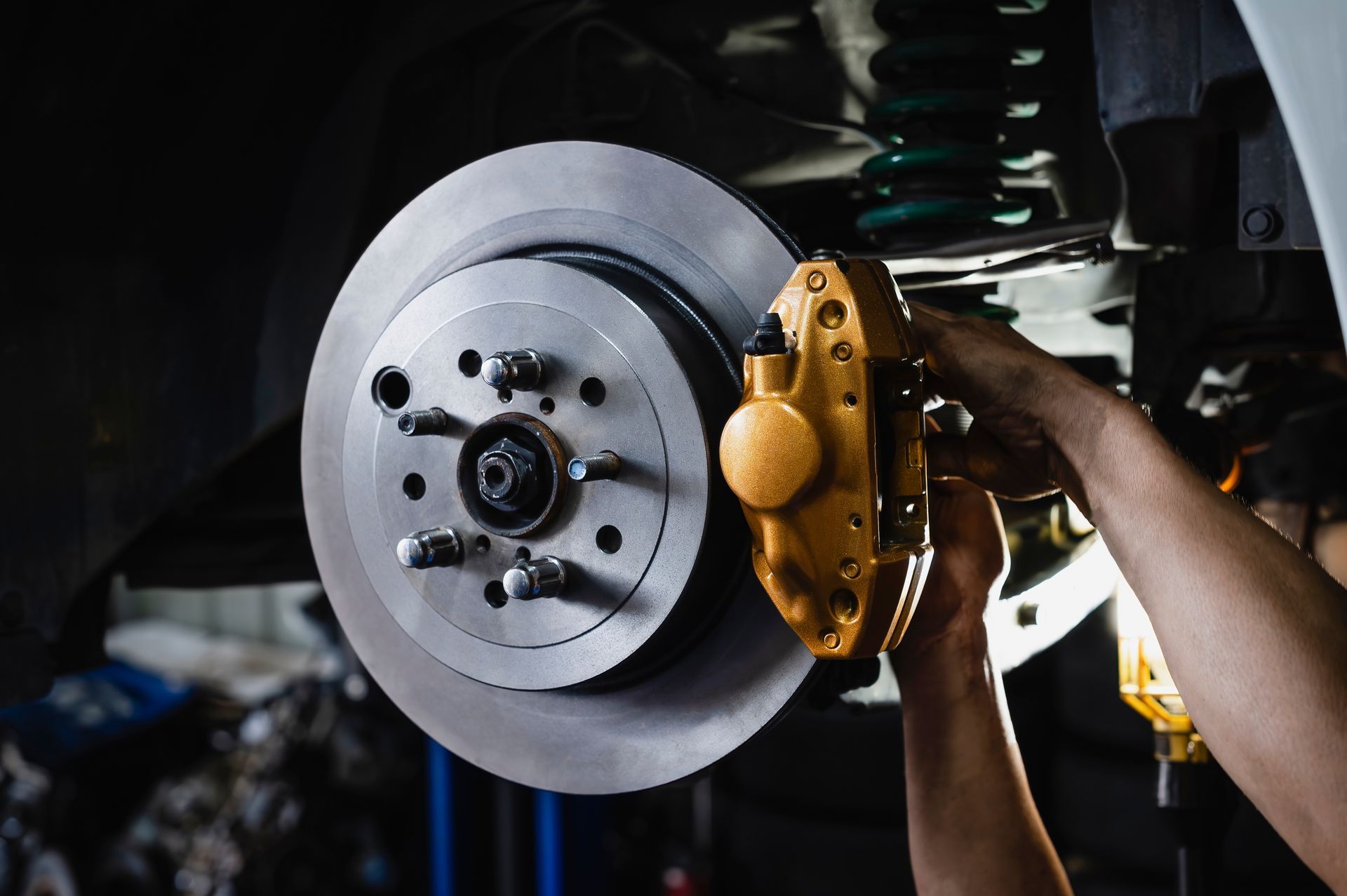
The repair process includes removing wheels to measure pad thickness with a caliper gauge, inspecting rotors for scoring or heat cracks, and testing caliper slide pins for binding that causes uneven pad wear. Technicians also check brake fluid for moisture contamination, which lowers the boiling point and leads to spongy pedal feel during repeated stops or mountain driving where brakes heat up significantly.
After new pads and resurfaced or replaced rotors are installed, you notice firm pedal response, elimination of noise during braking, and straight-line stops without pulling left or right. The brake system bedding process—where new pads and rotors mate through gentle stops—occurs during the first few dozen brake applications, after which full friction performance is achieved and stopping distances return to manufacturer specifications.
Brake work also involves inspecting the parking brake mechanism, brake hose flexibility, and proportioning valve operation to verify the entire system distributes hydraulic pressure correctly between front and rear axles. Ignoring squealing or vibration allows pad material to wear completely away, letting metal contact metal and creating grooves in rotors that require replacement rather than simple resurfacing.
Common Brake Service Questions
Vehicle owners often have questions about brake wear patterns, repair urgency, and what to expect during service.
How do I know when brake pads need replacement?
Most pads have wear indicators—small metal tabs that contact the rotor and create a high-pitched squeal when pad thickness drops to two or three millimeters, signaling it's time to schedule service before the friction material is completely gone.
What causes brake rotors to warp?
Repeated hard braking followed by extended contact with cold water—common when driving through puddles after mountain descents—creates rapid temperature changes that distort rotor surfaces, resulting in pedal vibration during braking that requires rotor resurfacing or replacement to eliminate.
Why does my vehicle pull to one side when braking?
A seized caliper slide pin or collapsed brake hose restricts hydraulic pressure to one wheel, causing uneven braking force that pulls the vehicle toward the side with stronger braking, a condition that also accelerates pad wear on the opposite side.
How long does brake service take?
Standard pad and rotor replacement typically requires one to two hours per axle depending on whether rotors need resurfacing or replacement, while caliper rebuilds or brake line replacement extends service time due to hydraulic system bleeding requirements.
When should I replace brake fluid?
Brake fluid absorbs moisture over time, reducing its boiling point and causing vapor lock during hard braking, so most manufacturers recommend fluid replacement every two to three years regardless of mileage, especially in Belgrade's humid spring conditions that accelerate moisture absorption.
Ray's Automotive & Diesel Repair handles brake repairs with attention to proper torque specifications and system bleeding procedures that prevent air from remaining in hydraulic lines. Arrange a brake inspection to evaluate current component condition and plan service before performance deteriorates.