Exhaust Flow That Reduces Noise and Backpressure
Exhaust System Repair in Belgrade for vehicles with loud operation, visible exhaust leaks, or declining engine performance
An exhaust leak upstream of the catalytic converter creates a distinct ticking noise during acceleration and allows unmetered air into the oxygen sensor readings, which causes the engine computer to miscalculate fuel delivery and trigger a check engine light. Ray's Automotive & Diesel Repair repairs mufflers, exhaust pipes, catalytic converters, and hangers that have corroded, cracked, or separated due to rust, impact damage, or mounting failure. The service addresses noise complaints, exhaust odor in the cabin, poor fuel economy from sensor contamination, and emissions failures that prevent vehicle registration, with inspection identifying the exact location of leaks, restrictions, or component damage throughout the system from manifold to tailpipe.
Exhaust system damage typically results from road salt corrosion that thins pipe walls until they perforate, impact with road debris that dents or tears components, or broken hangers that allow pipes to sag and crack at welded joints. Leaks before the oxygen sensors disrupt the air-fuel mixture calibration, while restrictions in the catalytic converter or muffler create backpressure that reduces engine power and efficiency.
Arrange an exhaust inspection to locate leaks and assess component condition before noise or performance issues worsen.
What Exhaust Repair Actually Accomplishes
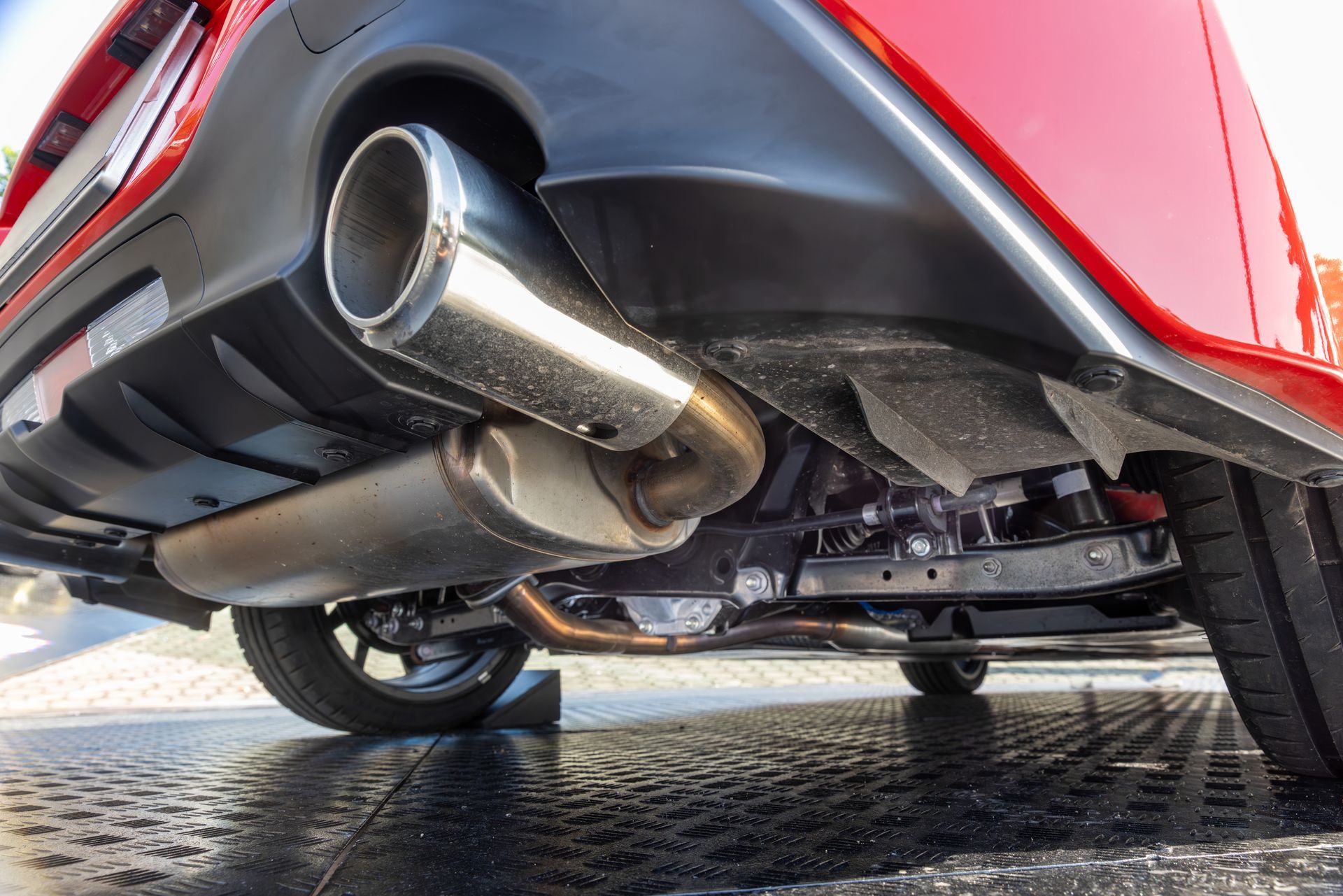
Exhaust diagnosis involves running the engine and listening for the characteristic hissing or ticking sounds that pinpoint leak locations, followed by a lift inspection to check for visible holes, separated joints, rusted-through sections, and broken or missing hangers. Backpressure is assessed when power loss is reported, as a partially blocked catalytic converter creates restriction that prevents exhaust gases from exiting efficiently. When components are replaced, the focus is on restoring sealed connections from the engine to the tailpipe so exhaust gases flow through the emissions control devices and exit without leaking into the cabin or underbody area.
Once exhaust repairs are complete, engine noise returns to normal operating levels without the loud rumble or rasp that indicates open pipe, and you no longer smell exhaust fumes inside the vehicle during operation. Fuel economy improves when oxygen sensor readings are no longer contaminated by unmetered air entering through leaks, and engine performance returns to expected levels once backpressure restrictions are eliminated. The check engine light turns off after sensor data confirms proper exhaust flow and catalyst function.
Some repairs involve only a muffler or pipe section replacement, while others require catalytic converter installation when internal substrate has failed or become plugged. Exhaust work does not include tuning or performance modifications but restores factory exhaust routing and sound levels. Hangers and mounting brackets are replaced as needed to support the system securely and prevent future stress cracks at joints caused by excessive movement.
What Property Owners Usually Ask
Exhaust system questions often focus on identifying leak locations, understanding how damage affects performance, and knowing when replacement becomes necessary.
What causes exhaust systems to rust through prematurely?
Exhaust component corrosion accelerates when short trips prevent the system from reaching full operating temperature, leaving condensation inside pipes that combines with combustion byproducts to form corrosive acids, and road salt exposure in winter months further speeds exterior rust in Belgrade driving conditions.
How does an exhaust leak affect engine performance?
Leaks upstream of oxygen sensors introduce unmetered air that skews sensor readings lean, causing the computer to add excess fuel in compensation, which reduces fuel economy and can trigger catalyst overheating, while leaks after the sensors mainly affect noise without impacting engine operation.
When should a catalytic converter be replaced?
Catalytic converters are replaced when internal substrate breaks apart and creates rattling, becomes plugged and restricts exhaust flow causing power loss, or fails efficiency monitoring that triggers a check engine light and prevents the vehicle from passing emissions testing required for registration.
What does a loud exhaust sound indicate about system condition?
Loud exhaust noise indicates an open path where gases are escaping before reaching the muffler, typically from a rusted-through pipe, cracked manifold, failed gasket at the manifold or converter connection, or a muffler that has corroded internally and lost its baffling structure.
How long does exhaust system repair take?
Most exhaust work is completed within a few hours when replacing sections of pipe, mufflers, or hangers, though catalytic converter replacement may extend longer depending on whether the converter is bolted or welded and how much surrounding heat shielding requires removal for access.
Ray's Automotive & Diesel Repair provides exhaust system inspection and repair that addresses leaks, noise, and emissions performance issues across all vehicle makes and models. Schedule service in Belgrade to resolve exhaust problems affecting your vehicle's operation and sound levels.